Freedom of Expression in Sri Lanka’s Digital Space
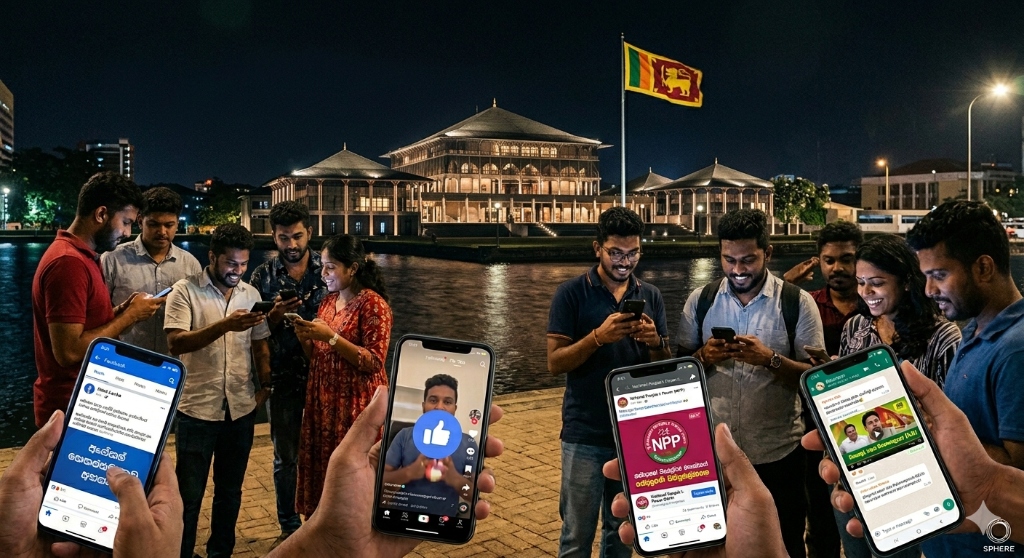
In the modern era, the public square has shifted from physical street corners to digital platforms. In Sri Lanka, this transition has been rapid, fueled by a society that increasingly relies on social media for news, community building, and political discourse.

In the modern era, the “public square” has shifted from physical street corners to digital platforms. In Sri Lanka, this transition has been rapid, fueled by a society that increasingly relies on social media for news, community building, and political discourse. However, as our conversations move into the digital realm, the protection of Freedom of Expression faces a new set of complex challenges, realities, and civic responsibilities.
The Numbers Behind the Screen
To understand the scale of this shift, we have to look at the data. Sri Lanka is currently experiencing a massive mobile-first digital boom. According to data from the Digital 2026 national insights report and the Telecommunications Regulatory Commission of Sri Lanka (TRCSL):
- Mobile Connectivity: There are roughly 30.3 million active mobile connections on the island translating to an astonishing 130% to 135% penetration rate, driven by widespread multi-SIM ownership.
- Internet Penetration: Approximately 13.9 million Sri Lankans are actively online, representing about 59.7% of the total population.
- Social Media Footprint: Around 9.0 million users are active on social platforms (primarily Facebook, YouTube, and WhatsApp), which means nearly 65% of everyone with internet access uses these platforms to consume news, debate politics, and share opinions.
This borderless pulse allows a single digital post to reach thousands in seconds, completely bypassing traditional media gatekeepers. While this democratizes information, it has also pulled the digital space directly into the crosshairs of legislative scrutiny.
The Economic Engine of the Online Space
Beyond news and politics, this digital expansion has completely rewritten Sri Lanka’s economic landscape. The internet is no longer just a place to talk it has become a primary survival and growth mechanism for livelihoods.
The domestic e-commerce market has transformed into a massive mainstream shopping channel, valued as a multi-billion rupee industry. There are now over 8.2 million active online shoppers in the country, with social commerce driven by platforms like Instagram Shopping, Facebook Marketplace, and TikTok Shop seeing rapid year-on-year growth.
At the same time, the digital space has unlocked unprecedented global opportunities for individuals. A thriving community of local freelancers, software developers, creators, and remote workers are bypassing geographical boundaries to offer their skills internationally, bringing vital foreign currency directly into the local economy. From small home-based bakeries in Kandy managing orders via WhatsApp Business, to tech professionals in Colombo serving global clients, the digital ecosystem has democratized entrepreneurship in ways traditional markets never could.
The New Legal Frontier: PDPA and the OSA Debate
Freedom of expression guaranteed under Article 14(1)(a) of the Constitution of Sri Lanka is not absolute. But as the state attempts to govern the internet, the boundaries of these restrictions have become increasingly blurred by a wave of new legislative frameworks.
Two major pieces of legislation now anchor this digital landscape:
- The Personal Data Protection Act (PDPA): Introduced to create a baseline for digital privacy, the PDPA regulates how personal data is collected, stored, and processed. In theory, it serves as a shield, protecting citizens from data weaponization and arbitrary surveillance. On the other hand there have been criticisms of PDPA citing the possibility of it being used to oppress journalists and whistleblowers.
- The Online Safety Act (OSA): Unlike the PDPA, the introduction of the OSA has become highly debatable and fiercely contested. While the law is framed as a mechanism to curb malicious online activity, critics, digital rights advocates, and legal experts argue its broad and ambiguous definitions of “false statements” create a severe “chilling effect.” When the legal risk of posting an opinion is too high or poorly defined, regular citizens choose to self-censor, quietly hollowing out free speech without a single post being officially banned.
A Double-Edged Sword: The Need for Civic Responsibility
But let’s be honest: the digital space is not a pristine utopia. The same immediacy that empowers a whistleblower or lifts up an entrepreneur also weaponizes the internet. The Sri Lankan online space has increasingly become a breeding ground for coordinated false information, deepfakes, vicious online harassment, and cybercrime. Women, marginalized communities, and political dissenters frequently bear the brunt of targeted trolling and digital violence.
Because of this, digital rights cannot be a one-way street. True freedom in the digital space requires a delicate balance between demanding state accountability and practicing responsible citizen behavior.
Reforming the Machinery: Beyond the “Weaponization of Law”
A major part of the anxiety surrounding new digital legislation stems from a painful historical context: Sri Lanka has a well-documented history where laws designed for national security or public order have occasionally been weaponized to silence journalists, activists, and dissenting voices. When new regulatory frameworks introduce sweeping, centralized powers, the fear of political misuse naturally intensifies.
True safety and justice online won’t come from simply piling on more restrictive text. Instead, the focus must shift toward meaningful institutional reform. Rather than setting up parallel oversight bodies that risk political interference, the country needs to genuinely empower and resource its existing, specialized technical and investigative institutions:
- Sri Lanka CERT (Computer Emergency Readiness Team): As the national node for cybersecurity, CERT requires advanced technical infrastructure, specialized talent, and sustainable funding to protect cyberspace and handle critical infrastructure vulnerabilities objectively.
- The CCID (Computer Crime Investigation Division): Frontline law enforcement officers dealing with digital fraud, extortion, and targeted online harassment are often completely overwhelmed. The CCID must be structurally and financially resourced with advanced digital forensics tools, continuous technical training, and streamlined procedures to tackle actual cybercrime efficiently—without becoming entangled in political policing.
By building up the capacity, operational independence, and resource base of these existing operational bodies, Sri Lanka can move away from reactive, punitive legal measures and toward a resilient, rule-of-law-driven digital ecosystem.
Moving Toward Durable Participation
Navigating this “silent screen” requires a multi-stakeholder approach that moves past the reactive social movements of the past toward a sustained, healthy digital culture:
- Digital and Legal Literacy: Empowering citizens to distinguish between malicious misinformation and legitimate dissent, while understanding their rights under the PDPA and other legislation.
- Algorithmic Transparency: Holding global tech giants accountable for content moderation. Algorithms must be trained to understand the specific linguistic nuances, political idioms, and cultural contexts of Sinhala and Tamil so that legitimate local commentary isn’t accidentally erased while actual hate speech slips through.
- Proportional Safeguards: Ensuring that national security or online safety laws are never repurposed as tools to silence legitimate digital critics.
Conclusion
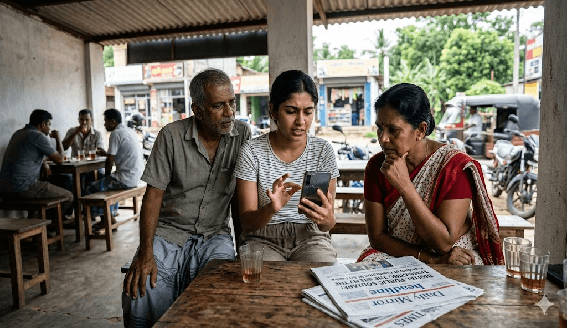
For Sri Lanka to foster a truly democratic digital culture, freedom of expression must be viewed as more than just a lack of censorship. It must be an environment where diverse voices from the tech-savvy youth in Colombo to the rural farmers using WhatsApp can participate in the national narrative safely, ethically, and without fear. Our goal remains clear: turning fleeting digital moments into a durable, responsible, and well-governed foundation for human rights.