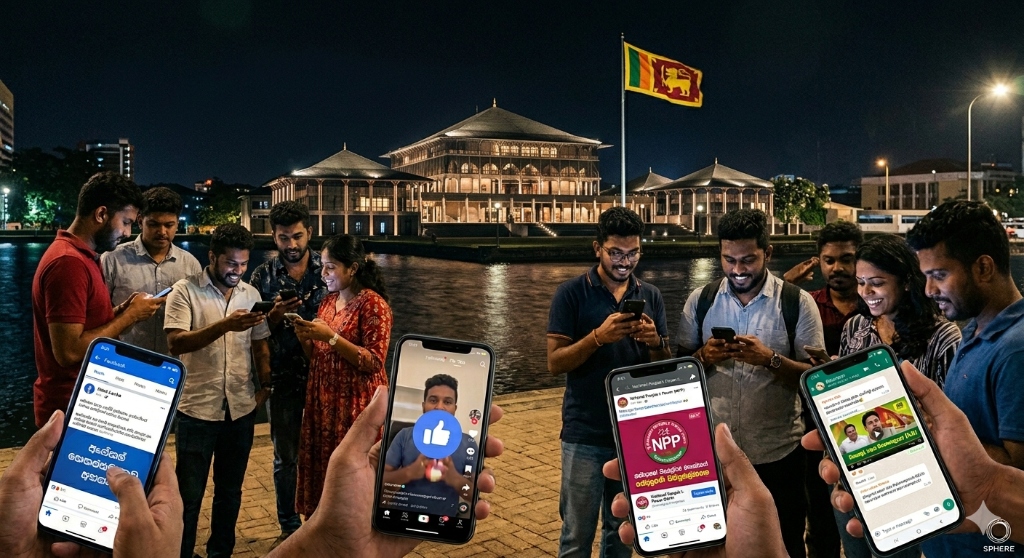
Navigating the Promise and Peril of Digital Democracy
The traditional image of democracy where citizens gathered in a town square to debate the future has been fundamentally rewritten. In the 21st century, the square is digital.

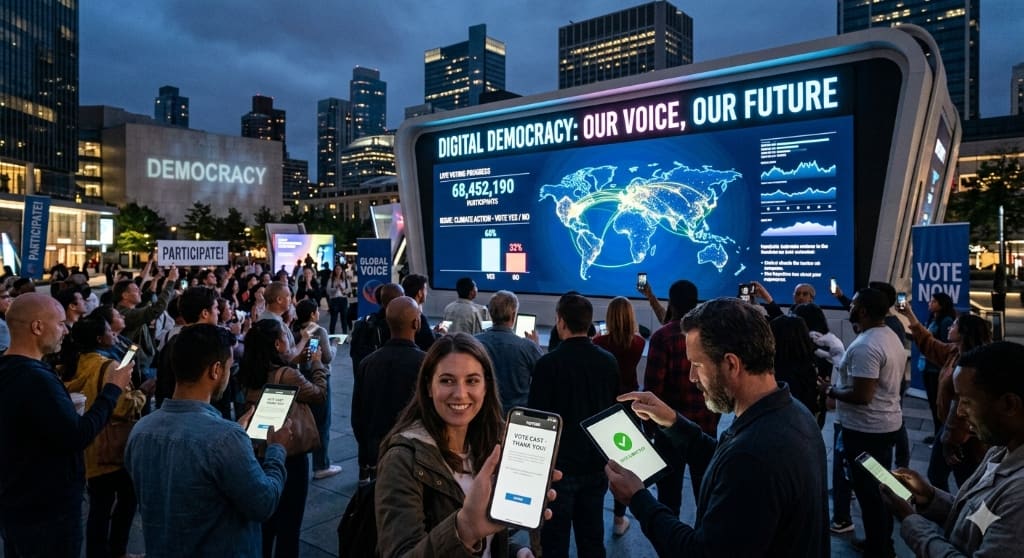
The traditional image of democracy where citizens gathered in a town square to debate the future has been fundamentally rewritten. In the 21st century, the “square” is digital. Digital democracy refers to the use of information and communication technologies (ICT) to enhance political participation, transparency, and government accountability. While it offers a vision of a more inclusive and responsive society, it also presents a complex set of challenges that threaten the very fabric of the democratic process.
The Promise: Empowerment and Access
At its core, digital democracy is about lowering the barriers to entry. In a traditional system, political engagement often requires significant time and resources. Digital tools flip this script:
- Direct Engagement: Platforms allow for “e-petitions” and direct consultation, where citizens can influence policy without needing a lobbyist.
- Transparency: Open-data initiatives mean that government spending, voting records, and legislative drafts are available to anyone with an internet connection, making “back-room deals” harder to hide.
- Inclusion: For marginalized groups or those in remote areas, the internet provides a megaphone. It allows for the rapid mobilization of grassroots movements, as seen in various global social justice campaigns over the last decade.
When implemented effectively, digital democracy creates a “feedback loop” where the government is constantly informed by the needs of the governed, rather than just once every few years during an election cycle.
The Peril: Misinformation and Polarization
However, the transition to a digital forum has not been entirely smooth. The same tools that empower citizens also provide a playground for bad actors.
One of the primary concerns is the algorithmic echo chamber. Social media platforms are designed to maximize engagement, often by showing users content that reinforces their existing biases. This leads to extreme polarization, where opposing sides no longer share a common reality.
Furthermore, the “democratization of information” has led to the weaponization of misinformation. Deepfakes, bot-driven propaganda, and coordinated “astroturfing” campaigns (fake grassroots movements) can sway public opinion and undermine trust in legitimate institutions. When citizens cannot agree on basic facts, the deliberation required for a healthy democracy becomes nearly impossible.
The Digital Divide and Security
We must also consider the Digital Divide. Digital democracy is only truly democratic if everyone has equal access. If participation requires high-speed internet and tech literacy, we risk creating a “tiered citizenship” where the voices of the elderly, the poor, and the rural are silenced.
Finally, there is the issue of security. As countries experiment with e-voting and digital identity, the threat of cyberattacks looms large. Ensuring that a digital vote is both anonymous and tamper-proof remains one of the greatest technical hurdles of our time.
The Path Forward
Digital democracy is not an inevitable upgrade; it is a tool that requires careful calibration. To succeed, it needs robust regulatory frameworks to combat disinformation, a commitment to universal internet access, and a renewed focus on digital literacy for all citizens.
The goal is not to replace the human element of politics with code, but to use code to make our human institutions more transparent, inclusive, and resilient. The Silicon Square is open; our task is to ensure it remains a place of genuine discourse rather than a hall of mirrors.